12/08/2026
Captives are getting a renewed boost in Europe and consolidating their role as a strategic risk financing tool. This growth, combined with regulatory changes and developments in the insurance market, is transforming how large risks are managed.
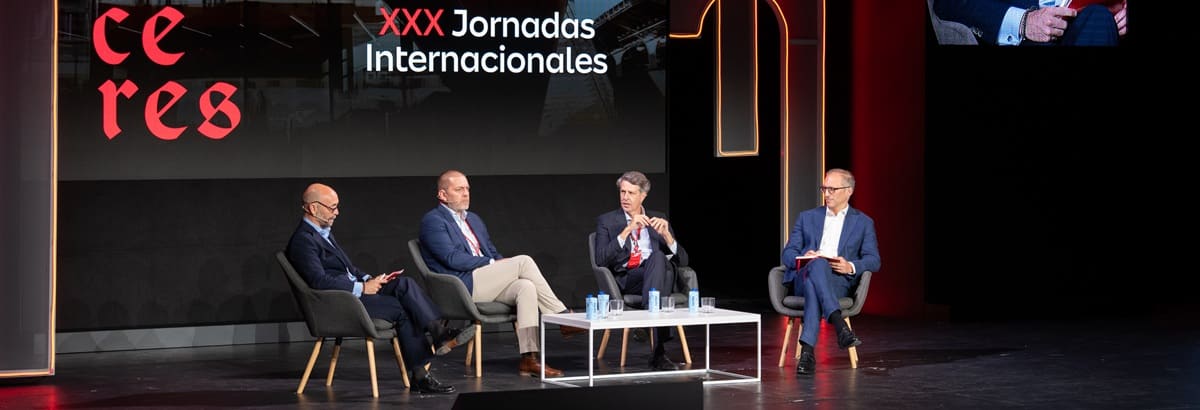
These developments are happening in a context marked by geopolitical uncertainty, which also complicates the risks. Captive insurance companies are no longer the reserve of large multinationals and have become a central element of international insurance programs and corporate resilience. With the objective of analyzing this evolution, the XXX Mapfre Global Risks International Seminar brought together François Beaume, Vice Chairman of Risk and Insurance at AMRAE, Luis Lancha, Chairman of AGERS, and Laurent Nihoul, CEO of FERMA, in a roundtable discussion moderated by Bosco Francoy, CEO of the company.
A new cycle for captives
Bosco Francoy opened the session by recalling that Europe is going through a moment of change after several years of tightening in the insurance market, with premium increases, capacity reductions, and greater restrictions on coverage. More and more European companies are creating or strengthening their own captive insurance companies, although the number of captives in the region is still moderate. “However, the ecosystem is solid and continues to grow,” he stated. Laurent Nihoul added that this growth is not only due to the increase in the number of companies, but also to the increase in premium volume channeled by existing captives. In his opinion, it’s a logical evolution. “When the market tightens, captives become more attractive,” he explained.
Ferma’s CEO also highlighted that this trend no longer affects only large multinationals: more and more medium-sized companies value the possibility of creating a captive, which is driving the development of new national regulatory frameworks. France, Spain, and the United Kingdom are currently debating residency issues for these captives. “It seems to me a very interesting development because, after all, a key feature of Europe is the free provision of services. So the question is: Why do you need a captive in your own country if you can establish it in Luxembourg, Ireland, Sweden, Malta, or in any other member state? I believe the answer lies precisely in SMEs. If you’re a Spanish company, you’d probably prefer to be able to do it here in Spain,” he states. Nihoul also recalled that the success of these new markets will depend on four factors: clear definition of the objective of the model, a competitive technical and fiscal framework, application of the regulation with proportionality criteria, and development of a specialized professional ecosystem capable of supporting captives.
France as an example of regulatory transformation
One of the main focuses of the conversation was the French experience following the reform approved in 2023. François Beaume recalled that, for decades, France had hardly authorized any new captives, which forced companies to establish them in other European countries. The situation changed after the pandemic, when the Government began to analyze new formulas to strengthen the financial resilience of the business sector.
The reform introduced the so-called resilience provision, a mechanism that allows captives to manage certain reserves with a long-term vision and that, according to Beaume, has represented a real paradigm shift. “Since then, we’ve gone from six to 22 captives being authorized.” Only this year, the supervisor has granted three new licenses and has the capacity to authorize approximately five captives per year,” he said. The profile of the companies is also changing. “We’re receiving more and more requests from medium-sized companies that previously didn’t even consider this possibility,” he explained. The next challenge, he added, is to consolidate a true ecosystem of specialized professionals that supports the growth of the market.
New strategic opportunities
Spain is experiencing a decisive moment thanks to the process of transposing the new European directive, an opportunity that, in Luis Lancha’s opinion, can position the country as a new center for the development of captives. The president of AGERS highlighted the dialogue that has opened between the supervisor and the risk managers through different advisory bodies, which allows incorporating business experience into the development of the future regulatory framework. For Lancha, success will depend on how the principle of proportionality is applied and on the treatment received by small and non-complex entities. If both elements find the right balance, Spain could build a competitive ecosystem not only for national companies but also become a bridge between Europe and Latin America.
At this point, the experts also addressed the evolution of international insurance programs. François Beaume argued that captives have ceased to be a complement and have become the core of the insurance architecture of large companies. “They’re no longer an add-on,” he summarized. Although he considers that global programs to be an efficient tool, the current context —marked by regulatory fragmentation, geopolitical tensions, and insurability problems— forces a continuous review of their design. “The question is to determine how much risk the company should retain and how best to finance it,” he warned.
Laurent Nihoul added that this evolution is also driving new ways of using captives. Traditionally, the process was as follows: the insurance company went to the market, bought the available coverage, and subsequently analyzed what part of the risk it could retain through its captive,” he explained. Now things are moving toward a captive-first strategy, which comprises first analyzing what risks the captive can assume before going to the insurance market to transfer only the excess exposure.
The role of the risk manager
The last part of the discussion focused on the transformation of the risk manager’s role. Luis Lancha argued that the profession is evolving from an eminently technical profile towards a much more business-linked strategic function. Laurent Nihoul added that “if no decision changes thanks to risk analysis, we’re probably not managing risk; we’re just doing the paperwork.”
For his part, François Beaume defined the risk manager as a translator between risk exposure and decision-making. Their mission no longer consists solely of identifying threats, but of influencing business decisions, understanding the priorities of each area, and helping to build more resilient organizations. “It’s advisable to be humble: risk managers do make some decisions, but the vast majority correspond to other people responsible within the organization. That’s why we need to intervene much earlier, upstream of the decision-making process. To achieve this, you have to connect with people, learn their language, and understand their business,” he concluded.
If you want to read more about the reflections on the evolution of captives in Europe and the future of risk management, don’t miss the European Captives and International Programs roundtable.