04/06/2026
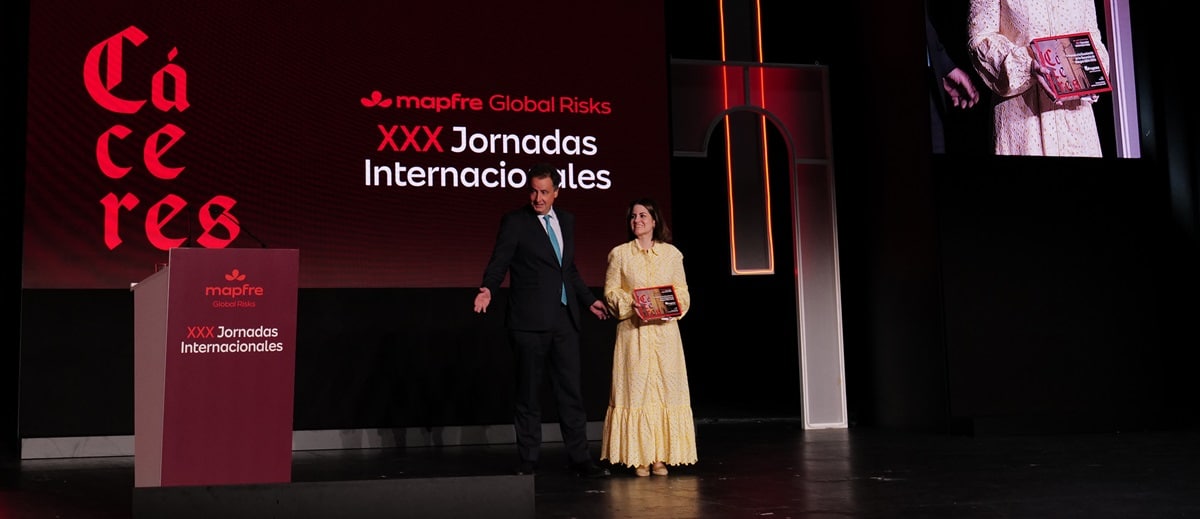
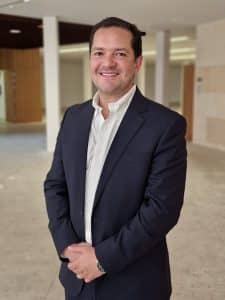
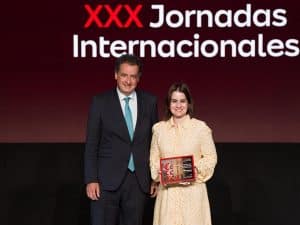
During the XXX edition of the Mapfre Global Risks International Seminar, held in Cáceres (Extremadura, Spain), from May 27 to 29, the V Award for Excellence in Risk Management was presented to Progreso. We didn’t want to miss out on the opportunity to interview Álvaro José Paiz Falla, executive director of Financial Risks of this leading cement, construction materials and solutions company, which has a presence in eight Latin American countries.
Congratulations on the award. What does this recognition of the risk management work that you do at Progress mean?
 Thank you very much. We receive this recognition with gratitude, but above all as a reflection of a way of understanding the management that we have built over time.
For us, risk management is much more than just a function – it’s a way to make decisions responsibly, especially in uncertain contexts. It’s a practice that connects planning, anticipation, and values.
And all of that responds to something deeper, to our purpose of building together the country we all want to live in.
Managing risks, in our case, isn’t just about protecting the business – it’s about ensuring that each decision contributes to generating well-being, trust, and sustainable development in the communities we operate in.
In that sense, we don’t see this as a point of arrival, but more as a renewed commitment to continue building together, an increasingly solid management system that’s consistent with our purpose and oriented to the long term.
What do you think are the key aspects of successful risk management?
I see three fundamental areas that need to be addressed.
- The first is anticipation – understanding the risks that exist before they materialize and manage them properly from day one.
- Second is the ability to adapt: environments change constantly, and a resilient organization needs to be able to adjust quickly without veering off course.
- And third, perhaps the most important, is the ethical dimension of decision-making. Risk management isn’t tested when everything is going fine – it’s in times of uncertainty, when making the right choice can define an organization’s future, that it’s put to the test.
Our Code of Values, Ethics, and Conduct (COVEC), our Leadership Agenda, and in the conviction to do the right thing, today and tomorrow, are our guiding principles.
Progreso celebrated 127 years of history in 2026. How have risks and risk prevention for the company evolved over time?
They have evolved enormously over the years, in both complexity and depth.
We’ve moved from managing mainly operational and local risks to facing an interconnected environment where environmental, social, technological, and economic challenges coexist. What could previously be addressed reactively now requires a strategic vision that’s integrated into the business from the very start.
However, there is something that hasn’t changed in those 127 years: the way we respond to uncertainty. From decisions made more than a century ago to recent moments like the pandemic, we’ve learned that managing risks also means having the conviction to prioritize people and the environment, even in the most difficult times. That coherence is, perhaps, our greatest strength.
 Thinking about the medium- to long-term future, what do you consider will be the risks that will have the greatest global impact in your sector?
Global uncertainty is today a constant, and in our sector, it manifests across multiple dimensions: from market volatility, technological transformation, and the evolution of social expectations.
Challenges in the supply chain, AI-driven technological transformation, and the cyber risks that this represents.
However, at Progreso we don’t start out thinking of uncertainty as a limiting factor. We see it as a reality that we can actively manage. We deal with it through planning, diversification, and above all, with a permanent mindset of adaptation.
Against that backdrop, we’re very clear about where to put the focus: in our circle of influence. That is, in those variables that we can manage, strengthen, and transform. From there, we leverage our competitive advantages to anticipate, make better decisions, and generate sustained value. And perhaps the most important thing we do is the way we understand time. At Progreso, we don’t work with quarterly horizons – we make plans that can be passed on from generation to generation. That allows us to address the situation with discipline and agility, but without losing sight of a greater objective: ensuring the sustainability of the business, of the communities we’re active in, and of the environment in the long term. From that perspective, risk management ceases to be a reaction to the context and instead becomes a tool for building the future, even — and especially — in the midst of uncertainty.
What value do you think Mapfre Global Risks can bring you in managing your insurance programs in that next decade?
 Mapfre Global Risks is a key ally for us in this vision of the future.
In an environment where risks are increasingly complex and interconnected, the value lies not only in the coverage but in the ability to understand, anticipate, and manage those risks jointly.
The most relevant aspect of our relationship is precisely that evolution towards a co-creation model, where we combine capabilities, experience, and knowledge to strengthen our decisions. It is a relationship built on trust, but also on continuous learning. Where each interaction contributes, adjusts, and improves the way we manage uncertainty. And that collaborative approach, where risk is managed as a shared challenge, will be increasingly decisive in the coming years.
Finally, and taking stock of these last three days in Cáceres, what would you highlight about the XXX Mapfre Global Risks International Seminar?
First and foremost, I would highlight the value of conversation and joint construction. These spaces facilitate something very powerful – they give us a chance to take a step back from day-to-day operations and reflect, share real experiences, and co-create solutions to common challenges.
Listening to different perspectives, understanding how others are addressing uncertainty, and finding connection points that strengthen everyone’s resolve is really valuable. But I’d also highlight the human component too: the possibility of strengthening trust-based relationships that are key to tackling an increasingly complex international environment. At the end of the day, risk management isn’t something you do alone. It happens in community, through collaboration, with strategic partners like Mapfre, and with the conviction that together we can better anticipate, better adapt, and above all, make better decisions for the future.