06/10/2026
A maritime accident ceases to be a local incident when it affects a critical point of the global network. Channels, ports, and straits concentrate trade traffic, turning a single blockade into a threat to supply chains and global trade.
Maritime transport supports the vast majority of global trade, and its efficiency depends on the continuous operation of a complex network of corridors, ports, and logistics nodes. However, this same concentration of flows produces vulnerabilities. The increase in the size and capacity of ships, the dependence on certain narrows and strategic channels, and the growing interconnection of international supply chains mean that a seemingly local accident can trigger disruptions far from the location of the claimable event. When the incident affects a particularly critical point of the network, its consequences can spread quickly, causing delays, cost overruns, route diversions, and disruptions in supply on a regional or even global scale.
Blocking of a world artery
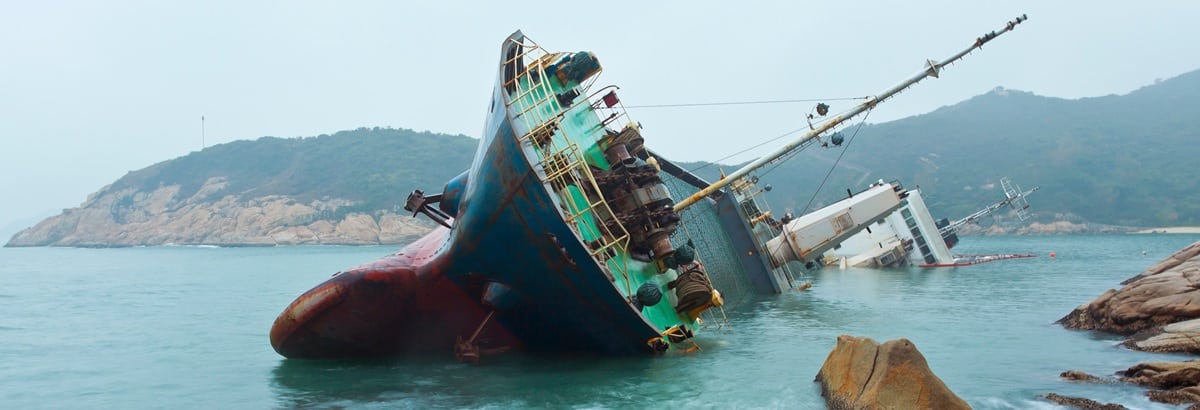
The Ever Given case is probably one of the clearest recent examples of this vulnerability. In March 2021, this large Japanese container ship was stranded in the Suez Canal for six days and seven hours. Strong winds and an intense sandstorm, combined with the large size of the ship (it had a capacity of 21,000 TEU and was at full load), contributed to the accident. A lack of visibility and little room for maneuver also hindered the rescue tasks.
The incident blocked one of the main connections between Asia and Europe and affected hundreds of commercial journeys. The World Bank, in a report on the Climate and Development of Egypt (CCDR), estimated that the daily cost of traffic interruption reached about 9.6 billion dollars — approximately 5.1 billion westbound and 4.5 billion eastbound. The accumulated losses and damages resulting from the incident were estimated at nearly 1 billion dollars.
But the consequences went beyond the goods in transit that were delayed. Port schedules were altered, congestion increased, and shipping companies had to modify routes and operational plans. Despite the difficulties, the response was quick and coordinated. An old section of the channel was reopened to relieve congestion, specialized rescue teams were mobilized, and constant communication was maintained with the shipping companies. Finally, canal activity returned to normal, as reported in an article by the United Nations Conference on Trade and Development (UNCTAD).
This incident was also a milestone in maritime insurance. It involved damage to the vessel, third-party liability, rescue operation, operations interruption, and effects on global logistics. The Suez Canal Authority initially claimed 916 million dollars from the ship owner, and after successive negotiations, the agreement reached in 2021 was, according to widely disseminated information, around 540 million.
The lesson that UNCTAD draws is clear: resilience doesn’t depend solely on avoiding accidents, but also on having the ability to respond effectively when they do occur. Improving traffic control systems, early alerts, automated terminal management, schedule planning, and access capacity can reduce the duration and cost of an interruption.
From the environmental impact to the economic crisis
It’s not just blockages of an international route that can have serious consequences: a hydrocarbon spill can produce a multiplier effect of a different nature: the damage begins in the sea and subsequently spreads to areas such as fishing, tourism, industry, employment, and even public finances.
The Hebei Spirit incident is a good example of this dynamic at play. In 2007, the Chinese oil tanker crashed off the coast of South Korea and spilled approximately 10,900 tons of crude oil. The response mobilized more than 100 vessels and around 1,500 private fishing boats, as reflected in the subsequent report prepared by ITOPF, an international organization that provides technical advice on responding to oil spills, chemicals, and hazardous substances at sea. This spilled affected hundreds of kilometers from coastlines and three provinces, and the cleaning operations lasted until October 2008.
On the Spanish coasts we also have a very memorable case. In 2002, the oil tanker Prestige was carrying about 77,000 tons of fuel oil when it suffered the accident off Galicia. The pollution reached wide areas in Spain, Portugal and France and, to a lesser extent, the United Kingdom. The economic impact far exceeded the value of the spilled cargo. In addition to the costs of salvage and cleanup, there was damage to ships, rigging, and infrastructure. This situation led to serious losses in fishing and seafood activity, as well as affecting tourism and hospitality. All of this also had a negative impact on the industry in general: when fishing is halted, for example, demand for transportation, supplies, ship repair, canning industry output, and other related activities also decreases.
Both cases show that the cost of an accident isn’t limited to the initial physical damage, and the resulting losses and environmental responsibilities can extend for years and cross borders.
The strategic importance of ports
One of the most recent international cases happened in the United States, when in 2024 the Dali container ship lost power and collided with the Francis Scott Key bridge in Baltimore, causing it to collapse. The accident blocked maritime access to the port and forced commercial routes to be diverted to other facilities. The redistribution capacity reduced the national impact, although it couldn’t prevent serious consequences to certain supply chains, workers, carriers, and port companies.
The response was quick and effective and once again demonstrated the importance of coordination. The Engineers Corps of the U.S. Army, the Coast Guard, the Maryland authorities, and other organizations established a joint command, and more than 1,200 people participated in the emergency operation. Shipping channels were progressively reopened, and Dali was refloated and removed on May 20. By June 10, 76 days after the bridge collapse, the channel had recovered its original dimension, and normal trade transit conditions were restored.
The Baltimore incident shows that an accident doesn’t need to affect a global artery to generate significant disruption – it’s enough to disable a relevant node whose replacement capacity is limited. In this type of scenario, infrastructure redundancy becomes an essential resilience tool and having alternative routes, ports, and systems in place that can be deployed rapidly means any absorption can be handled more effectively.