10/11/2026
The aging Latin American fleet presents specific challenges for hull insurance and requires underwriting criteria that take maintenance, management of the shipowner, and crew experience into account.
The age of a given vessel doesn’t always reflect its state of preservation, and nor does it determine its exposure to risk. In Latin America, where a large part of the seagoing fleet is more than 40 years old, the market is grappling with the need to review traditional risk assessment criteria.
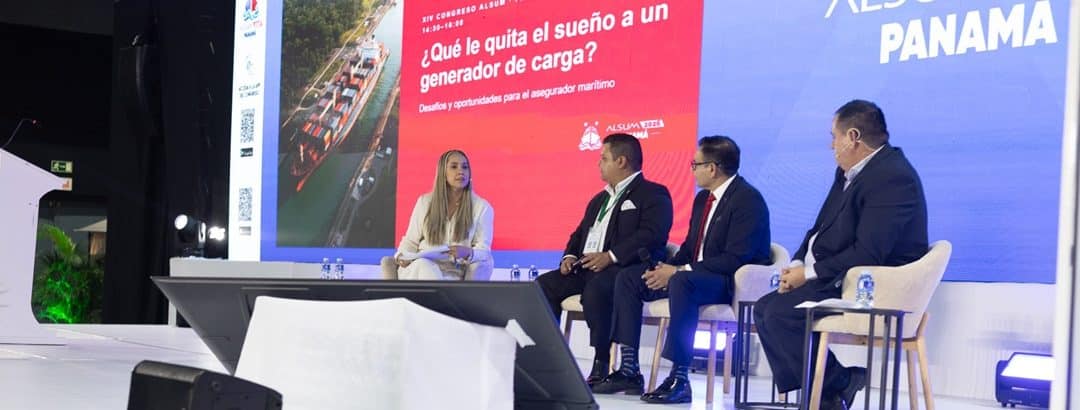
This was one of the issues addressed by Adrián Escoto, CEO of TitanUW, during the Latin American Maritime Insurance Congress of Alsum, which was held in Panama recently. His speech raised a fundamental question: are old boats really a bad risk or does the problem lie in how they are evaluated?
A difficult fleet to renew
The Latin American fleet is old for both economic and operational reasons. In the case of fisheries, catch limits established in each country condition the growth potential of companies. If a shipowner knows that he can barely expand his activity, it will be harder for them to justify the investment involved in acquiring new ships.
In cabotage and general cargo transport, the difficulties relate to accessing financing and the availability of contracts that can be used to warrant this investment. In both segments, many shipyards choose to keep their existing boats and extend their useful life.
“We have to focus on the reality of Latin America,” defended Escoto. Not all fleets are made up of large tuna ships or high-value units. Alongside these, there’s a large number of smaller ships, and renewing these vessels presents their owners with considerable problems.
This situation contrasts with the criteria of some markets and reinsurance programs, where it’s common to establish age limits of 30 years. However, applying those same parameters to a vessel that’s far older poses an insurability problem. “We know that the Latin American fleet is old and will continue to remain old,” said the head of TitanUW.
 The limits of traditional criteria
The age of the vessels isn’t the only challenge: the nature of hull insurance and how to assess its risks also influence it. This business line is characterized by its severity, where the frequency of claims may be low, but the economic impact can be very high.
Added to this is the limited implementation of classification criteria in much of the Latin American maritime sector. Although having the certification of a classification body provides information on the maintenance, construction, and operating conditions of a ship, this requirement presents limitations for older units, which may fall outside its acceptance criteria.
Based on the analysis of historical data on premiums and claims in the Latin American market, carried out with the collaboration of Alsum, Escoto highlighted that insuring vessels with more years of service under their belt doesn’t necessarily imply that the line is in trouble. In fact, the data compiled showed a generally favorable trend, except for Hurricane Otis.
These figures also don’t facilitate establishing a direct relationship between age and loss experience. A new ship can also suffer a fire or be shipwrecked, just as an old ship can perform satisfactorily for years and years.
Escoto insisted that hull insurance requires specialized professionals, different from those involved in typical cargo insurance. The joint management of both coverages can generate conflicts of interest, especially when the value of the merchandise exceeds that of the vessel itself and an emergency forces decisions that affect the interests of both parties.
How to evaluate the risk
Beyond the traditional criteria, the question is what the underwriter must analyze to determine the actual risk presented by each unit. Escoto’s proposal is structured around three elements:
1. The state of the boat
Maintenance is especially relevant in the face of the technological obsolescence of engines and mechanical systems. The availability of spare parts, the cost of repairs, and the storage times in shipyards can increase the cost of interventions and prolong recovery.
However, longer years of service don’t necessarily imply higher maintenance costs. The comparison between old tugboats and modern tugboats illustrates this difference. The former are powered by relatively simple propulsion systems, while many of the latter feature azimuth thruster systems, the repair of which can run to upwards of a million dollars. Thus, a breakdown in an old tugboat may require more repair time, but require less expensive components than those of a modern one.
Furthermore, underwriting terms can be tailored to these specific circumstances through mechanisms like depreciation, limits on certain towing expenses, or specific deductibles for machinery.
2. The shipowner’s perspective
The shipowner’s responsibility goes beyond mere ownership of the vessel. Onshore, they organize the activity, establish operational instructions, and must ensure that the necessary resources are available to maintain and repair the vessel. Their management capability has a direct impact on the safety of operations.
3. Crew experience
Once underway, operational responsibility lies with the captain, the chief engineer, and the rest of the crew on board. According to the data provided by Escoto, between 70% and 80% of hull claims can be attributed to crew negligence. Therefore, the experience and preparation of its members are decisive in assessing the risk.
Specialization as response
In conclusion, Escoto argued that the Latin American maritime sector can’t be evaluated exclusively with parameters conceived for markets with younger units. “This is what we had to live through,” he said, recalling that around 90% of the region’s fleet is made up of older boats.
The challenge for the insurance industry is to develop assessment criteria that are correctly adapted to the Latin American fleet. To this end, he considered it essential to strengthen collaboration between shipowners, insurers, brokers, and reinsurers through exchanging information about the maintenance of ships, their operating conditions, and the experience of crews.
His final message was a claim for specialization in maritime insurance. In a market where fleet renewal isn’t always possible, knowing the risk in depth can be more useful than discarding a boat solely because of its age.