27/10/2026
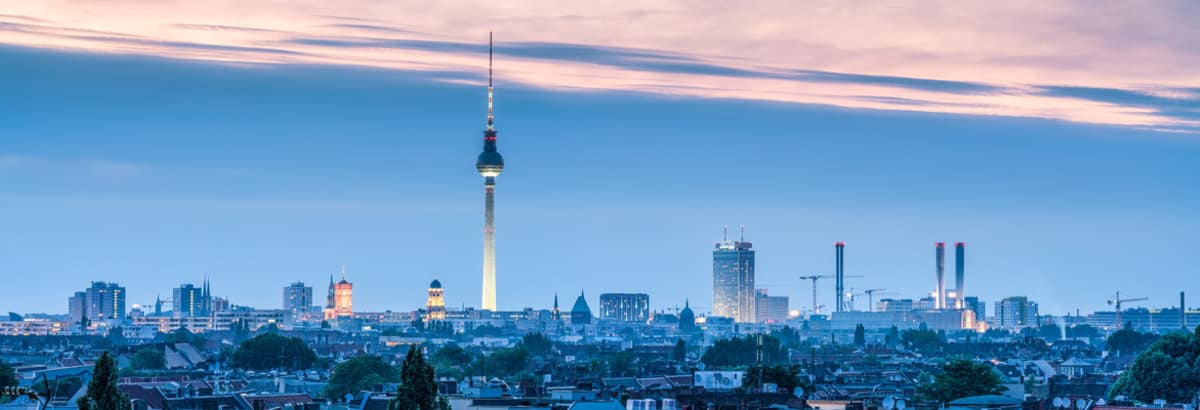
Berlin is the capital of Germany and one of Europe’s main political, economic, and cultural centers. Although it doesn’t have a large seismic or volcanic exposure, it does face significant risks related to climate change and urban development.
Located on an extensive plain, Berlin is traversed by the Spree and Havel rivers and surrounded by numerous lakes and green areas. With around four million inhabitants, the German capital concentrates intense administrative activity, business activity, industrial activity, and tourism activity, in addition to essential infrastructure for the operation of the country. This high concentration of population and assets means that certain extreme events can have consequences that go far beyond direct property damage.
The Berlin Climate Risk Analysis 2026
An increasingly warm city
The effects of climate change are already evident in the German capital and are forcing changes in urban planning, infrastructure management, and population protection systems. Rising temperatures constitute one of the clearest signs: between 1991 and 2020, Berlin recorded an average annual temperature of 10.1 °C, compared to an average of 9.3 °C for all of Germany.
The evolution of temperatures translates directly into greater urban risk. Days with maximum temperatures of at least 25°C have increased from an average of 39 to 49 per year, while days reaching at least 30°C have risen from 8 to 13. At the same time, colder days have decreased from 20 to 17.On June 27, 2026, Berlin-Tempelhof temporarily reached 39.9 °C, surpassing the previous capital record of 38.9 °C, recorded in 2015.
For this densely urbanized city, the problem isn’t just what the thermometer reads, but the so-called urban heat island effect, which can intensify the impact in areas with the highest concentration of buildings and paved surfaces and a lesser vegetation presence. The consequences affect public health especially, but also buildings, transport, public spaces, and essential infrastructure. To address this risk, Berlin approved in November 2025 an Action Plan against Calor, aimed at reducing health risks during extreme heat episodes, with special attention to the most vulnerable groups. The plan combines preventive measures and actions aimed at responding during heat episodes.
A demanding water management
Water management is also a major challenge for Berlin, which faces the alternation of drought periods with intense rainfall episodes. Although the annual rainfall hasn’t increased considerably — and in fact remains below the German average — the increase in temperatures is modifying the water balance. During the especially dry years from 2018 to 2022, the dry index approached the aridity threshold. Soil moisture doesn’t yet show a statistically significant trend, but summers concentrate the lowest values and temporary episodes of water stress can occur in the vegetation.
This drought can affect ecosystems and urban trees, increase the vulnerability of forests to fires, and can reduce some of the functions that vegetation performs within the city itself, such as providing shade, cooling, and water retention capacity.
The situation also requires reconsidering how rainwater is managed. In an increasingly impermeable city, water that can’t infiltrate quickly is channeled to the sanitation grid, while during dry periods, a resource that could help maintain vegetation and reduce temperatures is lost. For this reason, Berlin is moving towards a decentralized management model that seeks to retain, infiltrate, store, and reuse water where it’s generated.
Torrential rains and floods
According to the climate risk analysis, Berlin experiences a slight upward trend in episodes of intense rain. On average, the city records one day a year with at least 30mm of precipitation, and future projections indicate an increase in this frequency.Currently, the impact of these torrential rains can be severe, as was observed in the intense storms that the territory suffered last June.
This situation is mainly due to waterproof surfaces, which reduce the infiltration capacity and cause large volumes of water to quickly move towards streets, low areas, and drainage systems. The risk isn’t limited to flooding caused by rivers. The authorities distinguish between river flooding and those caused by heavy rainfall or by the overloading of sanitation networks.
Berlin therefore tries to address two apparently opposing problems: to prevent water from causing damage when it arrives in large amounts, and to conserve it when it is scarce. For this reason, the city is incorporating the concept of a”sponge city,” based on retaining rainwater within the urban environment itself to promote its infiltration, storage, and subsequent use.