07/07/2026
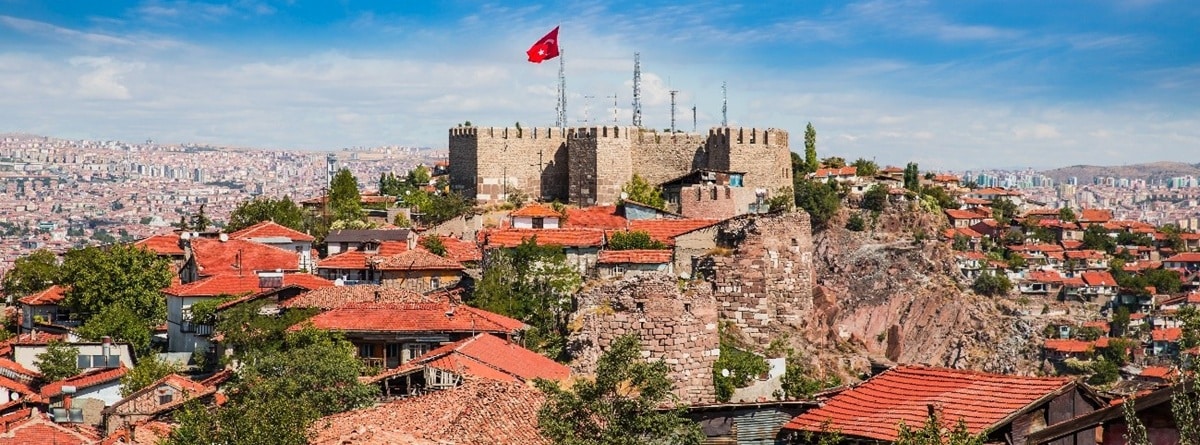
As a metropolis that’s home to nearly six million inhabitants and the administrative heart of Turkey, Ankara concentrates a large part of the country’s political management. Its rapid urban development and exposure to climate change mean it’s constantly dealing with a combination of complex risks.
Although its population has grown considerably in recent years, Ankara enjoys a moderate density across its entire territory (228.58 inhabitants per km²), with much denser urban areas, exceeding 2,000 and even 5,000 inhabitants per km² in some districts. It’s also a city with a relatively young population.
As the political capital of Turkey, Ankara accommodates key state infrastructure such as government institutions, administrative centers, hospitals, and a bustling third-level education scene. Protecting the city involves added challenges: from ensuring operational continuity in the face of disasters to safeguarding critical infrastructures and coordinating different levels of governance.
The AFAD, the disaster management authority which operates under the auspices of the Turkish Ministry of the Interior, coordinates crisis response, but also develops prevention programs, alert systems, and organizes citizen training. It’s also responsible for running technical training centers that cater to specialized search and rescue, fire management, and emergency planning personnel.
Exposure to high seismic risk
Turkey is located on one of the most active tectonic territories in Europe, and the world, between the Eurasian and African plates, and each year at least one earthquake of magnitude five or higher is recorded. According to the AFAD, the country ranks third worldwide in earthquake fatalities and eighth in the total number of people affected.
For this reason, effective coordination is crucial. One of the most significant episodes was the 1999 Marmara earthquake, which marked a turning point in the country’s emergency management policy. The earthquake released an enormous amount of energy and resulted in more than 17,000 deaths, driving institutional reforms in prevention and response.
In this context, Turkey has developed a risk management model that prioritizes prevention and preparedness over reactive response. The AFAD currently coordinates a network of provincial delegations and intervention units throughout the country.
However, vulnerability doesn’t depend solely on exposure to risk, but also on the quality of the built environment. Despite having technical knowledge and advanced regulatory knowledge in earthquake design, Turkey still suffers from deficiencies in the construction and maintenance of buildings, which increases the potential impact of earthquakes, especially in urban contexts like Ankara.
Drought and pressure on water resources
One of Ankara’s most relevant structural challenges is water management, which has experienced significant demand rises in the wake of continued urban and population growth, which itself has taken place against a backdrop of greater climate irregularity and a reduction in water availability. Turkey has had to deal with water scarcity for many years and suffered one of the worst droughts in its history as recently as 2025.
To address the problem, the Ankara Water and Sewerage Administration is introducing a gradual and controlled water distribution model, heavily reliant on a network of reservoirs and catchment systems. Ankara’s average daily water demand is around 1.3 million cubic meters, of which a significant part comes from a single dam, Kesikköprü.
Recent climate trends point to an increase in average temperatures and greater variability in rainfall, which intensifies the risk of recurring droughts. In this context, integrated water management — which includes reserve monitoring, infrastructure modernization, and consumption control — has become a strategic priority for local authorities.
Urban flooding: a temporary but intense risk
Although Ankara is not one of the provinces with the highest historical risk of flooding, its status as a large metropolitan area means it remains vulnerable to urban flooding. Floods in Turkey usually occur after heavy rains, rapid snowmelt, or the overflow of watercourses, and can develop within a few hours in the form of flash floods.
In the case of Ankara, the risk isn’t so much related to large rivers or extreme mountainous areas, but rather to climate factors associated with urban realities: high construction density, waterproof surfaces (asphalt and concrete), accelerated population growth, and drainage system limitations. During very intense storms, some streets, underground passageways, and neighborhoods located in low areas accumulate large amounts of water in a very short space of time.
Beyond natural risks
The regional and geopolitical context adds a series of general considerations that affect security in the city of Ankara. As the capital of the country, it’s the center of political, diplomatic, and administrative activity, which can translate into greater sensitivity as far as large gatherings or public events are concerned, as well as specific public order and security measures in certain spaces.
The Spanish Ministry of Foreign Affairs recommends exercising caution when traveling to Turkey and staying up to date on security developments in the country, especially due to the regional context in the Middle East and the possibility of terrorist incidents. Although Turkey generally has low crime rates, the Spanish authorities urge people to take more care when visiting large cities like Ankara and Istanbul, particularly in tourist areas, public transportation networks, and areas with a high concentration of people. The Ministry recommends maintaining an attentive attitude in metro stations, bus stops, and diplomatic offices.