11/07/2022
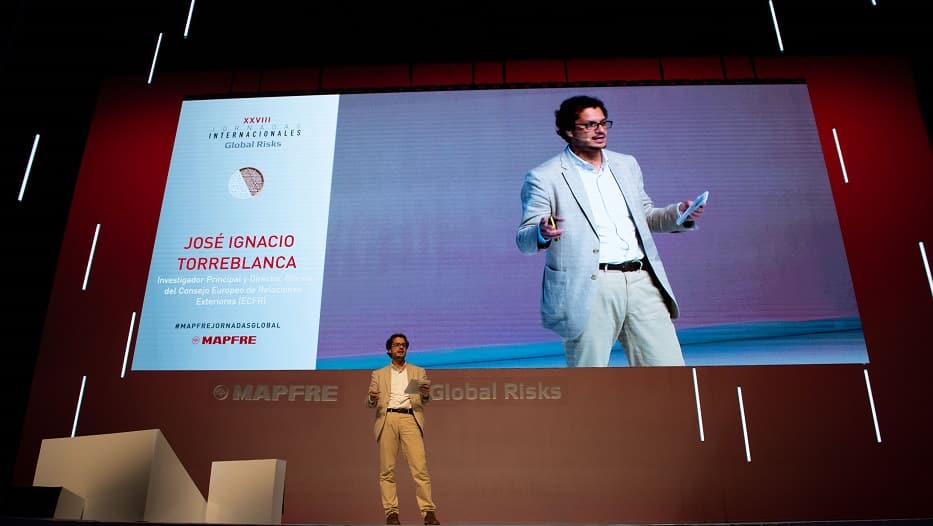
On June 24, at MAPFRE’s XXVIII International Global Risks Seminar, Ignacio Torreblanca, Principal Researcher and Director of the Madrid Office of the European Council on Foreign Relations (ECFR) gave a presentation explaining the current geopolitical situation.
In his opinion, the COVID pandemic brought and the Russia-Ukraine conflict have together given rise to three trends:
- Transition of global power, politically, between the U.S. and China, which implies adjustment to this situation by the other the countries.
- Increased protectionism due to the fragmentation of the international liberal economic order.
- Weakness of democracies, due to the pressure exerted by authoritarian states and powers.
Combining these three aspects, according to Torreblanca, we arrive at a liberal order that is based on very weakened rules. That’s why this turning to the politics of power, spheres of influence and this transition of power in the US signals an important trend.
The question in Europe is to what extent are we able to adopt an economic/technological growth model that responds to all those concerns at once?
On the other hand, the war has made us realize that we are huge consumers of security and energy and in the coming years we will see an increase in both defense and technological development budgets. In light of this, two important issues are raised: How will defense investments be funded? Are these investments sustainable?
According to the researcher, strategic autonomy programs in terms of defense and energy need to be developed and the following question arises: how are we going to complete this energy transition in geopolitical circumstances like the ones we are living through, where we are turning back to coal and becoming more dependent on fossil fuels?
From the point of view of the European Union, the fact that everyone is advocating self-sufficiency leads to a more fragmented world in which it is more difficult to operate, moving from a rules-based world to a power-based one.
We are sharing this interview in which these issues are explained to us in more detail.