23/07/2026
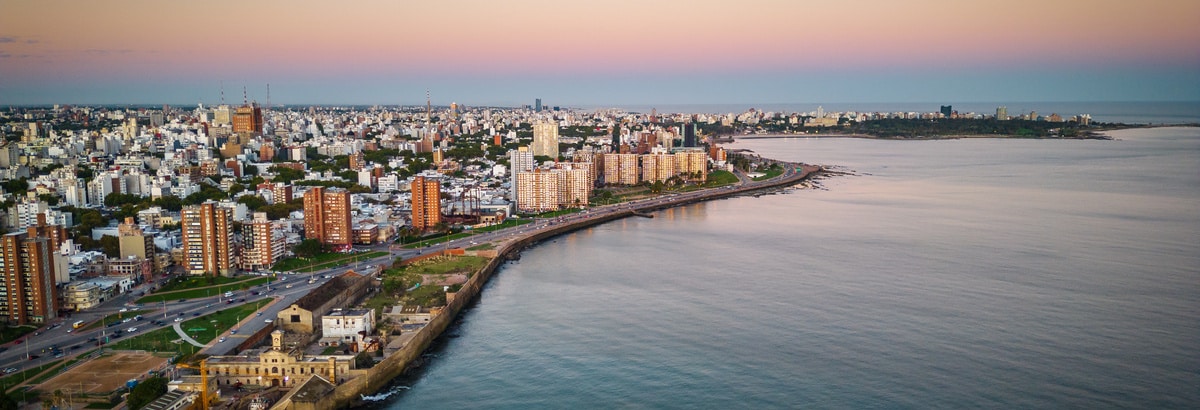
Uruguay’s capital and largest city is also the country’s main economic and cultural center. Although it’s recognized for its democratic stability and high quality of life, Montevideo faces significant challenges deriving from its coastal location and the effects of climate change.
Bathed by the Rio de la Plata, the city has historically stood out for its commitment to urban planning. By the mid-19th century, it was the first Latin American city to have a network-based sanitation system. Risks like coastal erosion, rising sea levels, or severe storms mean that new adaptation strategies and sustained long-term planning must be embraced.
A coastline facing a rising sea
Rising sea levels are one of the main challenges for Montevideo. Along its coast, water levels have risen about 11 centimeters since 1902. On top of that, various other factors of human origin – pollution, overexploitation of coastal resources, insufficient management of drains and landfills, and urban development in areas prone to flooding – mean that the time has come to look at the situation objectively and make plans to safeguard the city’s future.
Forecasts point to an increase in flooding that could affect strategic infrastructure, such as the port, the drainage network, or the oil refinery. Additionally, Uruguay’s Ministry of Environment estimates that up to 10% of the coastal shoreline could disappear before the end of the century. This process would have a significant economic impact in a country where, according to the Coastal Zone Climate Change Adaptation Plan, 59% of tourism activity is beach-related.
With the objective of reducing the risk of flooding, in 2011 the national and departmental administrations initiated a program to expand the capacity of the drainage system by building large underground tanks capable of storing millions of liters of water during heavy rains.
Increased erosion pressure
Coastal erosion represents another major threat to Montevideo. Climate change is accelerating this process, the effects of which are worsened by certain human activity, such as urbanization on primary dunes or alterations in the natural dynamics of sediments, and the consequences are affecting the 19 beaches dotted along the Montevideo coastline.
Some urban development policies have also contributed to increasing the pressure on the coastal front. This is the case of the National Interest Statement Act on Improvements in the Conditions of Access to Housing of Social Interest, which has promoted the construction of housing through tax incentives, including developments located in areas close to the coast.
To halt the retreat of the shoreline and reduce the associated effects, the Montevideo’s Ministry of Environment is promoting various measures, including beach regeneration through sand replenishment, the installation of capture barriers and vegetation fixation systems to stabilize sediments, as well as a remote monitoring system that allows real-time tracking of the coastline’s evolution.
The adaptation is also being addressed from a national perspective. Within this framework, the REACC Coasts project – Resilience and Adaptation of the Coastal Zone to Variability and Climate Change will be developed between 2026 and 2030, with an investment of 10 million dollars aimed at strengthening the resilience of the Uruguayan coastline.
The challenge of extreme events
Heavy rains and strong winds constitute another of the most relevant natural risks for Montevideo. Historically, they have caused urban flooding, soil saturation, and rising watercourses, with significant material damage. The city’s vulnerability is partly due to structural factors, such as the existence of piped streams, an insufficient drain network, and low-lying areas where water accumulates when drainage systems reach their maximum capacity.
The effects of climate change have intensified both the frequency and the intensity of these weather phenomena. Between 1961 and 2017, average annual rainfall rose by between 10 and 20%, while wind speeds recorded during extreme events saw increases of a similar magnitude.
One of the most serious episodes took place in July 1923, when an intense storm – accompanied by hurricane-force winds, extratropical cyclones, and a rise of the Plata river of up to 3.3 meters – flooded large areas of the city. More recently, in August 2005, a 10-hour storm with gusts of up to 174 km/h caused the death of 10 people and left more than 20,000 affected in Montevideo and other areas of the country.
Actions against climate change
The institutional response to these risks combines action on infrastructure with planning and climate governance policies. Among the main initiatives is the Urban Sanitation Program of Montevideo, developed by the government with the support of the Inter-American Development Bank, which aims to expand the sewage network, improve rainwater drainage, reduce the expanse of flood-prone areas, and decrease pollution in streams and waterways.
Local climate action was stepped up in 2009 with the creation of the Interdisciplinary Working Group on Climate Change, which is responsible for developing adaptation proposals and strategies through the collaboration of specialists from different disciplines.
This commitment was consolidated in 2022 with the creation of the Commission for the promotion and achievement of the 2030 Agenda, responsible for coordinating the implementation of the Sustainable Development Goals in various government departments and for promoting policies aimed at strengthening the resilience of Montevideo in the face of the effects of climate change.