17/09/2026
On April 28, 2025, Spain was left without electricity from one moment to the next. The blackout, which paralyzed essential infrastructure and services for hours, shone a light on a key device, the electric generator – our last backup when the network fails.
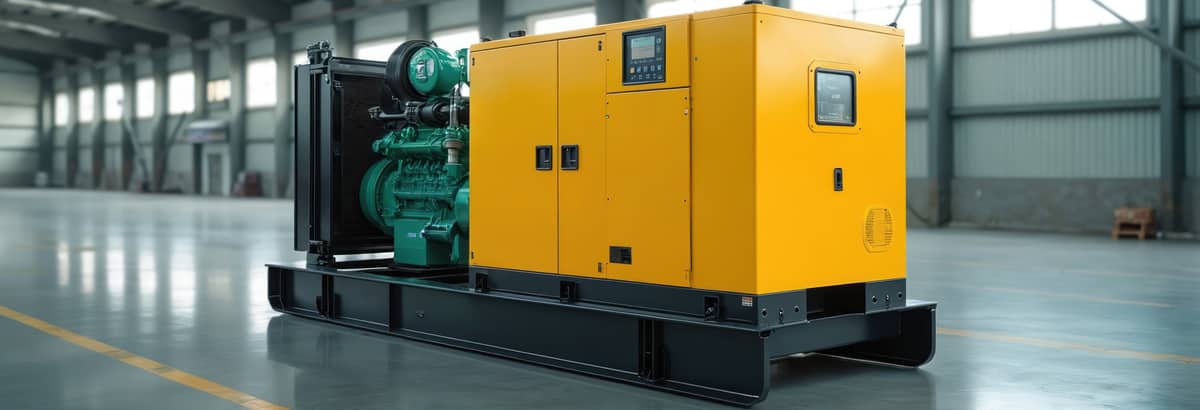
Strictly speaking, an electric generator is a piece of equipment that transforms mechanical energy into electrical energy. To operate, it needs a mechanical energy source to drive its axis. In autonomous power generation applications—such as those designed to provide emergency supply during grid failures—the generator is typically integrated into a generator set. This assembly also incorporates an engine to provide the necessary mechanical energy, along with the control systems and other auxiliary components required for operation.
Although one of its best-known uses is to provide emergency electricity when a grid failure occurs, a generator set can also be used as a primary or continuous source in facilities that don’t have access to an adequate or sufficient grid, as well as for one-off applications or to cover peak demand.
Depending on the use and operating conditions, we can distinguish several types of power:
- Emergency power or backup power. Used in hospitals, data centers, and other critical facilities. The generator set starts operating when the power grid fails and allows essential services to remain operational.
- Mains power. The generator functions as a regular source of supply, providing continuous electricity to a facility that doesn’t have an adequate or sufficient electricity grid.
- Providing operating power for a limited time. Supplies a constant load for a limited number of hours. It’s a suitable option for certain applications where a temporary supply is needed, but not continuous operation.
A second layer of security
Emergency generation or backup units play an essential role in areas where the continuity of the electricity supply is critical. Generators don’t necessarily keep a complete installation running. Their purpose may be limited to supplying electricity to equipment and services that can’t be interrupted, such as control systems, emergency lighting, cooling, or servers.
For this function to be possible, generators are usually integrated with other backup systems, such as uninterruptible power systems (UPS) or batteries, which allow the supply level to be maintained during the first moments of a power outage, while the generator starts and begins to produce electricity. In this way, different technologies can work in a coordinated manner to extend the autonomy of a facility.
The blackout in Spain on April 28, 2025, highlighted the importance of having this capacity in place and ready to deploy. The interruption affected much of the peninsula and forced numerous essential facilities and services to resort to their backup systems. The International Energy Agency (IEA) identified the episode as the largest blackout recorded in Europe since the one that occurred in Italy in 2003. The agency also contextualized the event as being indicative of a power grid that’s increasingly dependent on electricity. In this situation, generators helped maintain activity where a power outage could have especially serious consequences: hospitals, telecommunications networks, emergency services, and other critical facilities.
A transversal and strategic technology
The role of generators extends far beyond buildings. In transportation, they can support airports, railway stations, tunnels, signaling systems, control centers, ports, or logistics facilities. In the energy sector, they can power control and pumping systems, communication networks, as well as certain auxiliary installations. And in telecommunications, they’re essential to maintain stations and centers that can’t afford a prolonged interruption.
The healthcare sector is one of the most obvious examples of how generators can be deployed. Hospitals and emergency care centers need to maintain medical equipment, lighting, communications, and air conditioning systems even when the power grid is down. The same applies to water and sanitation facilities, where electricity is necessary for pumping, treatment, and distribution.
From blackout to resilience
A year after Spain’s blackout, the National Market and Competition Commission (CNMC) published a report of recommendations and measures following on from the incident, in which it proposed improvements for the future. The document is based on the investigations and analyses carried out during the months following the incident and proposes a roadmap to strengthen the operability and resilience of the electrical system.
Beyond the Spanish case, the conclusions of the report highlight that resilience doesn’t depend solely on preventing a disruption from occurring, but also on having mechanisms in place that can limit the consequences. The CNMC highlighted the need to reinforce the system’s robustness in a scenario of increasing operational complexity, marked, among other factors, by high renewable generation penetration and greater volatility of tensions.
When applied to facilities, this principle reinforces the role of emergency power generation systems: having an alternative source facilitates the maintenance of essential loads when the network is down and prevents a supply interruption from paralyzing critical services.
The 2025 blackout thus left a conclusion that transcends that episode itself: electrical continuity depends not only on the network functioning but also on being prepared for when it stops working. In that scenario, generators go beyond being a temporary response to an emergency and instead become part of the infrastructure that helps maintain essential services, reduce the impact of outages, and strengthen the resilience of facilities increasingly dependent on electricity.