26/05/2020
These are some of the issues discussed during the webinar held by the Addvalora Institute, with collaboration from MAPFRE Global Risks experts.
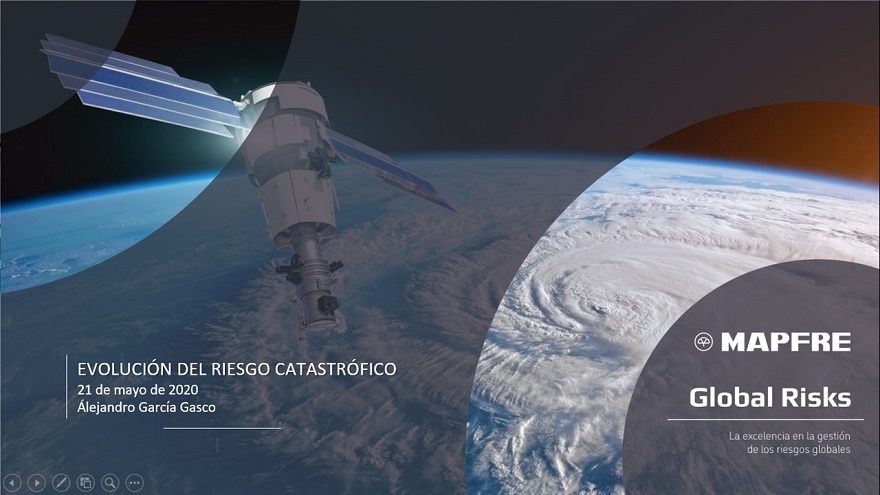
On May 21, Jose Luis Cubero, Head of Benefits in the Property Damage Claims Department, and Alejandro García Gasco, Technical Head of the Engineering Area at MAPFRE Global Risks, participated as guests in a webinar held by the Addvalora Institute on catastrophic risks with significant attendance by industry specialists from companies in Spain and Latin America.
During the meeting, Alejandro presented the pre-claim technical view of catastrophic risks. He explained what accumulation control consists of, how evaluations are conducted for locations and operations, and the methodology used to weigh them.
For his part, José Luis explained the post-claim view, the difficulties inherent to managing an international claim—currency, legislation, language—and the importance of understanding the cultural differences between the various regions and countries, particularly during negotiation.
Lastly, during the period for questions and requests, the issue was posed if COVID-19 can be considered a natural risk. To answer this, José Luis Cubero explained that there are statements in certain markets, like the United States, that have ruled that this pandemic can in fact be considered a natural risk. Although the economic losses occurring are not a direct result of property damage. As José Luis specified, this is an unprecedented worldwide event that is still ongoing. There are opinions regarding it, while a unanimous international definition has not been reached thus far.