09/04/2026
Mining is consolidating itself as a strategic axis in the global economy in a context of growing demand for critical minerals and reshaping supply chains. This article analyzes the synergies and challenges in the cooperation between Latin America and Canada.
The energy transition and digitalization are redefining the industry, which is advancing against a backdrop of increasing geopolitical competition to secure safe and sustainable supply chains. In this context, Latin America stands out for its abundance of resources, while Canada contributes capital, technology, and advanced regulatory frameworks. This relationship occurs at a time when producing countries seek to overcome a merely extractive model and strengthen their local capabilities. This purpose was reflected, for example, in the 2026 Intersessional Meeting of the Conference of Mining Ministers of the Americas (CAMMA), held in Toronto, Canada, where a Biennial Action Plan aimed at promoting regional cooperation and capacity development was approved.
In this article, José Manuel Salazar-Xirinachs, executive secretary of the Economic Commission for Latin America and the Caribbean (ECLAC), addresses the challenges and opportunities of this strategic alliance.
A key link of global mining
“Latin America and the Caribbean, along with Canada, form an essential axis in global mining due to the magnitude and diversity of their mineral resources, as well as the capabilities developed for their exploration and exploitation,” notes the executive secretary of ECLAC.
The figures support this claim. The Latin American region holds nearly half of the world’s lithium reserves, a key component for the energy transition, electric vehicles, and portable devices, and approximately one third of the global reserves of copper, silver, and molybdenum. This is complemented by significant proportions of other strategic resources such as graphite, nickel, or rare earths, which are essential for sectors such as renewable energies, electronics, and defense.
Several Latin American countries, such as Brazil, Chile, Mexico, and Peru, are among the leading producers, thanks to a consolidated mining tradition that dates back to the origins of their modern economies.
Canada underpins this position with solid institutional, technological, and financial foundations. “This combination of geological abundance, accumulated experience, and established institutional frameworks explains its strategic position in global mining,” summarizes Salazar-Xirinachs. In addition to having its own resources, the country has developed a benchmark mining ecosystem, which includes international companies, research centers, and specialized capital markets.
Resources, technology, and investment
Canada has, for many years, been the main mining investor in Latin America and the Caribbean. Between 2005 and 2024, investment plans in metals and minerals from this country amounted to more than 62 billion dollars, which represents almost 28% of the regional total. In 2024, Canada leads foreign participation in mining projects in Chile and Peru, with 28% and 19%, respectively. In Chile, most of the investment is domestic, while in Peru, foreign investment predominates.
This leadership is driven by the Canadian financial system, particularly active in the mining sector, and supported by two stock exchanges (the Toronto Stock Exchange and the TSX Venture Exchange), which channel capital into projects at various stages of development, especially in exploration.
But the contribution goes beyond financing. “Canada provides knowledge and technology, as it has a significant ecosystem, with universities and government support through initiatives to promote research, development, and innovation in the sector,” adds Salazar-Xirinachs. Some of these developments are transferred to the Latin American countries where Canadian companies operate, strengthening local capabilities and boosting productivity.
Cooperation isn’t limited just to productivity issues – it also encompasses the social and environmental impact of projects. This aspect is particularly relevant in a context where sustainability has become a central factor for the viability of mining. Initiatives such as ‘Towards Sustainable Mining,’ driven by the Canadian Mineral Association, or the international cooperation programs aimed at strengthening responsible and resilient supply chains of critical minerals promoted by the Canadian government, seek to enhance responsible practices and improve the sector’s governance.
Latin America’s strengths
Latin America is particularly attractive to international mining players due to the high availability and quality of their resources, access to qualified labor, and, in many cases, the regulatory stability that governs mining operations and openness to foreign investment.
“In the last decade, the growing global demand for critical minerals has intensified geopolitical and economic competition among the major industrialized economies,” explains the expert. Many of these minerals are essential for the technologies associated with clean energies, as well as for strategic sectors such as information technologies, communications, and defense technologies.
In addition, the region has abundant solar, wind, and water resources, which allows for the integration of renewable energies and desalination water in mining projects, ensuring a more responsible and sustainable supply. “Using clean energy and water sources that don’t compete with other resources helps reduce dependence on fossil fuels and mitigate socio-environmental conflicts in the territories,” he asserts.
Critical minerals as a development engine
Strategic minerals, in addition to being an economic opportunity, can become an instrument for the productive transformation of Latin American countries. “These sectors are fundamental for development because they align with the potential competitive advantages of countries and have a high capacity to stimulate growth and productivity through various mechanisms:” the encouragement of innovation, the strengthening of economic diversification, the technological modernization, the generation of tax revenues, and the creation of decent jobs.
In addition, they can contribute significantly to decarbonization objectives and to environmentally friendly production. “Their utilization under modern governance, sustainability, and value aggregation schemes can generate multiplier effects in the economic structure, enhancing a more balanced and mutually beneficial relationship between producing countries and the countries demanding these resources during the energy transition,” he adds.
Challenges of a productive cooperation
If the advantages of this alliance are undeniable, the challenges associated with it are not to be underestimated. The main concerns are related to the need to reconcile gaps and needs in producing countries and the applicant countries of their resources. Latin America needs to move towards more responsible and sustainable exploitation of minerals and strengthen the production chains, both upstream and downstream of mining. In addition, consumer countries seek to ensure sustainability, traceability, and security in the supply chains.
“One way to reconcile these interests and enhance cooperation would be for the buying countries to agree on stronger mechanisms for knowledge and technology transfer.” “These actions could strengthen the science, technology, and innovation ecosystems of the countries in the region, facilitating their adaptation to new global demands,” admits Salazar-Xirinachs.
At the same time, Latin American countries could expand their institutional, technical, and operational capabilities to better leverage technological transfer processes and develop more sophisticated value chains. “In this way, more balanced and mutually beneficial cooperative relationships could be generated,” he concludes.
Articles collaborators
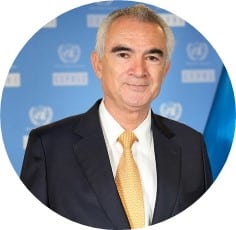 José Manuel Salazar-Xirinachs took office as executive secretary of the Economic Commission for Latin America and the Caribbean (ECLAC) on October 3, 2022. He has enjoyed an outstanding career at numerous international organizations. He worked at the International Labour Organization (ILO), the Organization of American States (OAS), the Costa Rican government, the Costa Rican Development Corporation, and FEDEPRICAP.
In the academic field, he has published extensively on development, trade, productive transformation, competitiveness, and employment, and has taught at the University of Costa Rica, the National University of Heredia, the University of Cambridge, and Georgetown University. He has a degree in Economics from the University of Costa Rica, a Master’s degree in Development Economics, and a PhD in Economics from Cambridge University.