12/02/2026
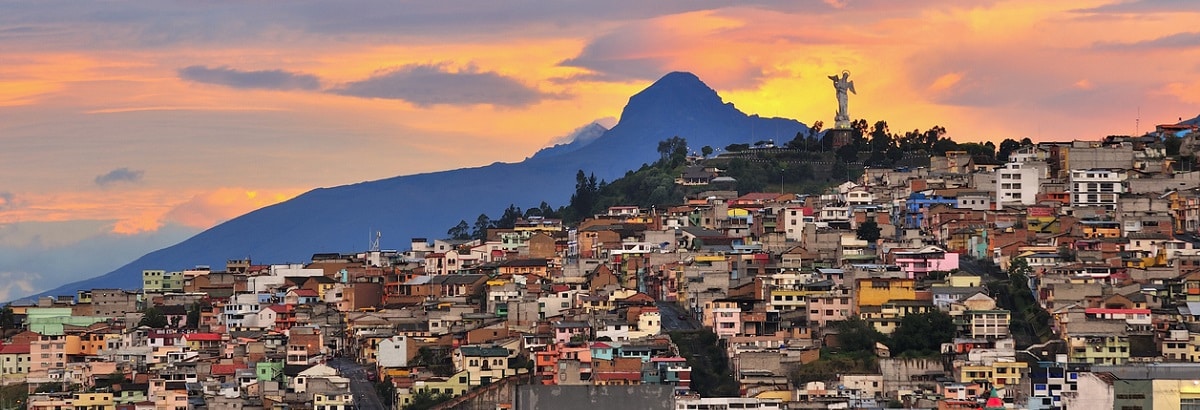
Quito, a city of altitude, ravines, and history, extends 2,850 meters above sea level, in the heart of the Andes mountain range. Surrounded by volcanoes and hills, the Ecuadorian capital is a UNESCO World Heritage site, a melting pot of heritage, aspirations, and also challenges.
With nearly 2.9 million inhabitants, the Metropolitan District of Quito is not only the political and administrative center of the country but also a strategic hub in the heart of the Andean region. However, its urban growth, often faster than its planning, has accentuated its vulnerability to natural disasters, citizen insecurity, and a geography as majestic as it is complex. All of this requires integrated risk management strategies that can no longer be postponed.
Urban safety, an increasing threat
In recent years, Ecuador has gone through a serious security crisis linked to drug trafficking. Although the sharpest focus is in on the coast, the capital has not been spared. Quito has seen an increase in crimes such as thefts, extortions, and assaults, even in residential and tourist areas.
Citizen security in Quito is addressed through parallel strategies, such as the Security and Peaceful Coexistence Programs promoted by the city government or the National Citizen Security and Peaceful Social Coexistence Plan, driven by the Ministry of the Interior. Both instruments include actions such as the installation of video surveillance systems, the strengthening of the Community Police, crime prevention programs in schools, and citizen culture campaigns. Community dialogue and mediation spaces are also being promoted in neighborhoods with high levels of conflict, aiming to reduce social tensions and encourage shared responsibility for security.
When the rain overflows the mountain
Founded in 1534 on the foundations of old Quitu, the capital has always lived in harmony with the mountain. But in recent years, the rains have become more erratic, intense, and difficult to predict.
In the collective memory still remains the flood of January 2022, which affected the El Tejado, La Gasca, and La Comuna ravines. The force of the water, amplified by the deforestation of the slopes and rain 37 times more intense than expected, caused the death of at least 28 people and swept tons of mud, stones, and debris into inhabited areas.
The first quarter of 2025 was one of the rainiest in recent history. Quito received about 299 millimeters above average, doubling historical records at some rain gauges. That excess, combined with the abruptness of the terrain, resulted in 627 emergencies—floods, landslides, structural collapses—in vulnerable neighborhoods.
In response, Quito has implemented the Climate Events Plan, an operational strategy for active prevention that monitors extreme rainfall, cleans drains and streams, and identifies critical areas. More than 300 neighborhoods have been classified as high-risk due to poor drainage or susceptibility to landslides.
On a larger scale, the newly approved Climate Action Plan of Quito 2025 (PACQ 2025) articulates 79 actions aimed at adaptation and resilience to climate events, and promotes nature-based solutions, such as the reforestation of strategic slopes.
Climate change is no longer a distant possibility, but a current threat that affects infrastructure, increases the risk of overflows in streams, and challenges the response capacity of the city.
The advance of fire in times of drought
The dry season also does not offer a truce. In September 2024, Quito experienced the worst wildfire season recorded in 30 years. It simultaneously faced 27 active hotspots in areas such as Guápulo, Cerro Auqui, and zones near the historic center. The fire consumed at least 146 hectares, affected homes, left seven people injured, and forced the authorities to declare a state of emergency.
Throughout that same year, 340 forest fires were reported, with more than 2,270 hectares destroyed and estimated losses of 20 million dollars. Ninety-nine percent had human causes: agricultural burns, campfires, garbage disposal, and negligence during excursions.
In light of this reality, and in the face of the increasing frequency and intensity of these events, the city has responded with a more robust strategy. The Metropolitan Plan for Comprehensive Disaster Risk Management (PMGIRD) includes the creation of green belts, improved access points for machinery, and a gradual relocation of settlements in risky areas. In parallel, temporary brigades, forest patrols, the use of surveillance chambers, and environmental education have been strengthened.
More than 1,200 community training sessions have been held in churches, schools, and peripheral neighborhoods. And data from the Fire Department confirm a positive trend: in 2025, the number of fires has decreased significantly compared to previous years.
Earth that shakes, volcano that watches
Natural disasters caused by nature are not limited to fire and water. The seismic history of Quito dates back to colonial times. Shocks like those of the 17th and 18th centuries forced a reformulation of architectural styles and the strengthening of foundations.
The Quito Fault, an underground geological system, generates low-magnitude but recurring seismic swarms. Adding to this is the presence of the Pichincha volcano, which rises to the west of the city. Although currently moderately active, it remains under constant monitoring since its last significant eruption in 1999 by the Geophysical Institute of the National Polytechnic School, as part of the national volcanic alert system.
In response to these risks, the National Plan for Risk Reduction and the Comprehensive Disaster Risk Management Law establish courses of action for preparing against geological threats: structural reinforcement of heritage buildings, evacuation drills, training of educational authorities, and constant updating of risk maps. In Quito, these actions are implemented with the support of the National Risk and Emergency Management Service (SNGRE) and in coordination with the Metropolitan Government.
Resilience starts in the neighborhood
Beyond the national plans, it is the neighborhoods that give shape to resilience. Community committees in areas such as San Lorenzo, Osorio, and Pambachupa, neighborhood alert networks, local brigades, prevention workshops, and family evacuation protocols have been promoted for years.
Schools have become centers for risk education. Students, teachers, and families participate in drills, learn to identify threats, and organize safe return routes.
Risk management in Quito is articulated between urban planning, citizen mobilization, and institutional integration. The challenge is enormous; a densely populated city, with infrastructure in constant tension and multiple natural and social threats. But so are the responses, increasingly organized, cross-sectoral, and aware that resilience is not improvised—it is built.