31/03/2026
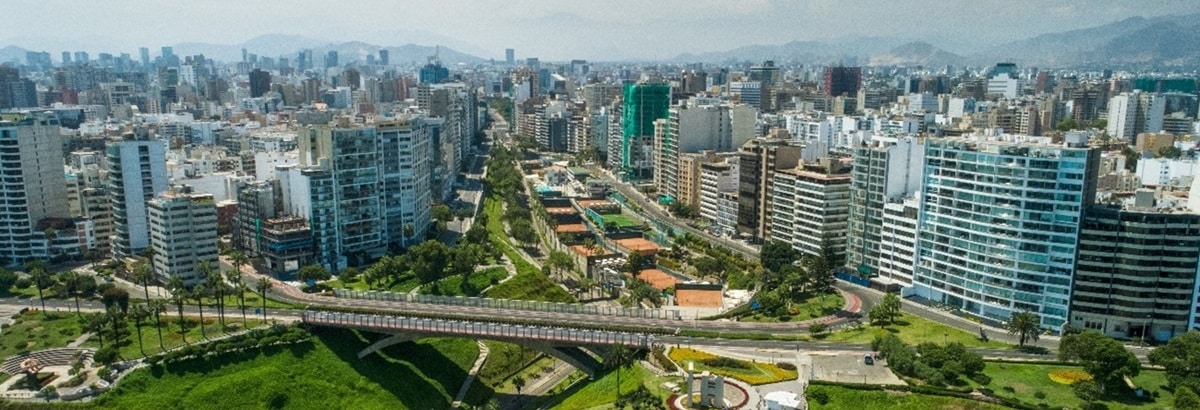
The capital of Peru is a cosmopolitan city, with a diverse tourist offering and a much-vaunted gastronomic scene. Its urban landscape combines colonial mansions with modern urban developments. However, it also faces natural threats and various urban, social, and economic pressures.
Like many other important metropolises in Latin America, the city of Lima has experienced significant demographic growth, resulting in an active and bustling city. According to the National Institute of Statistics and Information (INEI), the population is 10.4 million, and this concentration of people is posing considerable challenges. Growing demand for housing, services, and mobility are all now problems to be addressed, especially due to irregular expansion and the occupation of areas at risk.
This not only affects urban planning but also exposes a greater number of people to threats of all kinds, such as earthquakes, floods, or service interruptions, as warned by the National Center for Disaster Risk Estimation, Prevention, and Reduction (CENEPRED). Let’s examine some of the most salient risks facing this thriving city.
Water supply
Due to its geographic location, Peru as a country is highly vulnerable to climate change. The Ministry of the Environment of Peru and the National Service of Meteorology and Hydrology of Peru, SENAMHI, warn of the phenomena that most affect its capital, such as variations in precipitation, (both excess and scarcity), decreased river flows that supply Lima (Lurín, Rímac, and Chillón), and an increased frequency of extreme events.
The availability of water in Lima largely depends on seasonal flows, as well as on the management of high Andean watersheds. Some studies conducted by INEI, based on data from SENAMHI, show fluctuations in the production of drinking water and warn of flows lower than the historical average for recent years. This water crisis, especially in periods of drought, translates into the possibility of imposing rationing or having to deploy water tankers in peripheral neighborhoods.
Another phenomenon related to water are mudslides or flash floods (huaicos), violent landslides of liquid, rock, and mud that are triggered in the ravines due to intense rains in the central highlands. They affect the districts of Lima Este in particular, causing blockages on the Central Road and damages to housing and infrastructure. The landslides that occurred in 2023 and their devastating effects on the city are an example of the magnitude of this climatic event.
Other critical infrastructure
In addition to the water supply in Lima, other infrastructure face considerable risks, like transportation, energy, or logistics, for example. In the area of mobility, congestion, technological obsolescence, and the absence of resilient networks expose the city to systemic disruptions if the road axes fail or if public transportation suffers damage, as revealed by municipal reports and urban mobility analyses conducted by public entities.
Regarding logistics and the supply chain, the port of Callao and the terminals in the area constitute the main foreign trade node, so any impact from climate phenomena could lead to a conflict. The statistics from the National Port Authority indicate that this port concentrates a large part of the cargo traffic in the country, linking the local economy with global risks. The greatest threat would be the simultaneous interruption of basic services and logistics with its corresponding economic and social impact.
We mustn’t forget that Lima is located in the Fire Belt area of the Pacific, a critical area. The Geophysical Institute of Peru and CENEPRED have developed scenarios that show the possibility of large-scale earthquakes producing effects from structural collapses or tsunamis on the central coast. Studies warn about the vulnerability of buildings and electrical networks, and recent events such as the earthquake in June 2025 underline the current level of exposure and the need for early warning systems and preparedness programs. The threat level is high for people, the economy, housing, supplies, and critical infrastructure.
Political and economic risk
Conflicts over urban inequality, social exposure, climate crisis, or system and infrastructure vulnerability reach the political level. Risk management requires stable institutional coordination, as well as adequate financing. Numerous government reports and the World Bank indicate that institutional reforms have improved the frameworks, but gaps in governance, corruption, political instability, and the public attention deficit are slowing down the implementation of other structural measures.
The economic impacts also need to be given due consideration. Dependence on foreign trade and the concentration of logistics operations in the port of Callao mean that certain external shocks, such as the global crisis, disruptions to supply chains, or pandemics, among others, have immediate and significant repercussions on local activity and employment. The greatest risks relate to falling imports and exports, unemployment, and fiscal pressure when global disruptions occur or when port infrastructure is affected by extreme events.
In addition to the foregoing, it’s worth noting that Lima faces other emerging threats. One of them is pollution: air quality in the city and the pollution of water sources from industrial and urban discharges can affect people’s health. The fragility in sanitation services in less affluent areas also increases the risk of disease outbreaks in post-disaster situations.
Measures and provisions
To avoid the threats and their effects on this city, some measures have been implemented. Water security has been established as a strategic priority, accelerating investments in alternative sources, advancing projects planned in government plans, and improving watershed management and water transfer mechanisms.
Lima is also updating its vulnerable buildings registry, while promoting reinforcement programs for public and private housing, and CENEMED is deploying early warning systems complemented by evacuation protocols at airports and other key points, especially pertaining to earthquakes and tsunamis. In parallel, protection plans are being developed and rolled out for electrical networks, aqueducts, and logistical routes that integrate climate criteria for greater resilience of critical infrastructures into their design.
In terms of urban management, the Peruvian government is prioritizing growth in safer areas, regularizing services along the periphery, and financing sanitation and mobility works to reduce exposure inequalities. Finally, work is being done on strengthening governance with the consolidation of permanent coordination mechanisms between institutions, as well as ringfencing stable financing that will be directed at prevention and not just reaction.
In conclusion, we can say that Lima faces a confluence of risks, but the diagnoses and official models provide a clear roadmap for the immediate future. The optimal course of action is to get ahead of the scenario and act decisively now, when the official evidence allows for designing interventions that protect lives, assets, and the strategic role that this city plays in the national economy.