06/03/2026
At times, the immediacy of the news cycle and the urgency to convey the latest in what’s happening around the world can provoke a whirlwind of disjointed data and opinions. We feel it’s opportune to pause, take a step back and analyze a series of events that generated significant noise in the media from a rational perspective.
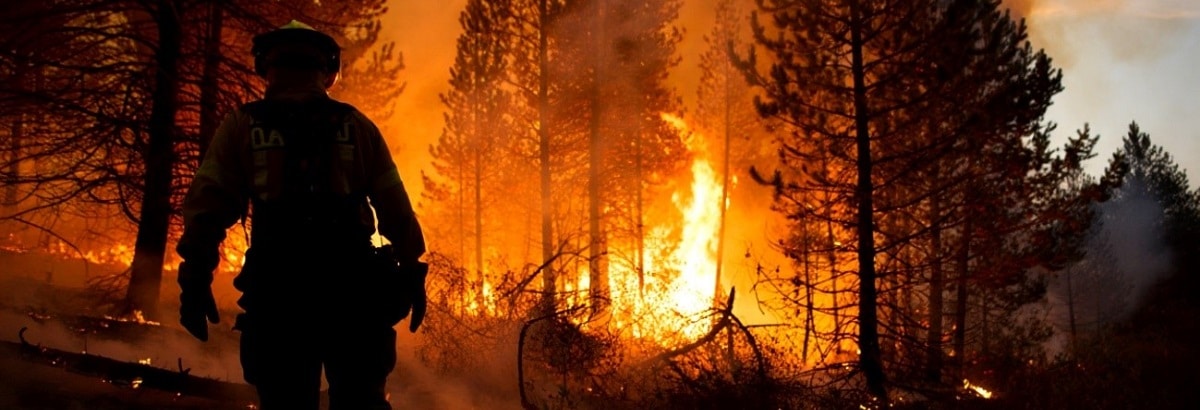
In this article, we’ll address the fires that affected Spain in 2025 with the help of expert Ignacio Pérez-Soba, doctor in mountain engineering and dean of the Official Association of Mountain Engineers in Aragon.
Are fires in Spain becoming more frequent and severe? What do the data tell us?
The problem with fires in Spain isn’t unique. It’s part of a global phenomenon that affects almost all ecosystems on the planet. In the Mediterranean, although Spain is number two in absolute figures as far as burned terrain goes, we’re number seven in relative terms when we look at forested area: countries like Portugal, Algeria, or Italy are recording worse data.
Spain has one of the best statistical databases in the world on forest fires: the General Statistics on Forest Fires (EGIF) contains partial data going back to 1955 and complete data from 1968 onwards. Analyzing these data series presents clear conclusions that go against what many people may incorrectly perceive as being true. The number of fires has decreased since 2006 and has stabilized since 2012 at around 12,000 annually, less than half of the more than 25,000 recorded in 1995 and 2005. The total area burned shows a similar trend, whereby a sustained decline has been observed since 1994, with an average of 118,000 hectares burned between 2001 and 2025, far from the more than 400,000 hectares burned in critical years like 1978, 1985, 1989, or 1994. The average area of a fire has also fallen from 30–40 hectares to about 10 today. Similarly, large forest fires (defined in Spain as those that exceed 500 hectares (250 in the Canary Islands)) have fallen from 162 in 1985 to an average of about 30 per year. Even in 2025, an especially bad year, 63 such fires were recorded, less than half of the all-time high.
However, one indicator is evolving negatively: large forest fires are getting larger and larger, going from an average of 1,113 hectares in 1978 to almost 2,200 in 2023. This is the most concerning aspect of the problem, and the one that requires a new solution.
Climate, territorial, and operational reasons for fewer, but larger ones, fires
From a climate standpoint, it’s worth noting that the main indicators have improved in Spain despite an increase in average temperatures; this is due to the fact that in recent decades, fire extinction systems have improved significantly. But climate change is increasingly generating new and extremely dangerous situations that surpass these systems: the frequency of critical weather situations (adverse synoptic storms); and in many large fires, the so-called nighttime window no longer exists as temperatures remain high for 24 hours and nights can no longer be used to slow down a fire. These situations affect large areas, favoring the existence of multiple simultaneous fires that stress emergency systems to the limit.
Across Spain, the problem arising from the proliferation of urbanized areas that are directly connected with mountainous areas is a serious one, as it increases the risk of ignition and complicates extinction. The influence of rural depopulation is also often emphasized, although I want to insist that the decisive factor is not depopulation itself, but the disconnection between civil society and forest management. Very depopulated provinces that have managed to maintain a tradition of active forest management, show better fire indicators than other more populated areas, and are an example to follow.
Regarding operational factors, it’s important to highlight what’s known as the extinction paradox, which relates to the fact that the success of current systems has reduced the total number of fires, but it has favored those few fires that aren’t controlled properly initially in becoming large ones. Investment has been massively focused on extinction, diverting funds from forest management, without realizing that the area left unattended is instrumental in controlling the phenomenon. The marginal utility of adding more means of extinction is already almost nil because the current means work well against normal fires, but are overwhelmed by large fires in extreme conditions.
“The success of current systems has reduced the total number of fires, but it has favored those few fires that aren’t controlled properly initially in becoming large ones.”
Cross-border coordination and extinction means
The management of cross-border forest fires presents an added complexity, as it requires coordinating political, operational, and technical efforts among territories that often have distinct legal frameworks, capabilities, and priorities. Internationally, the European Union has built a strong system to respond to emergencies that exceed one state’s capacity.
Within Spain, there are 18 different extinction systems in place (the State and the 17 Autonomous Communities), and coordination among them all is essential. The competent ministry for the environment, (Ministry for Ecological Transition and Demographic Challenge), has historically played a key role as a liaison and support body, both through the Committee for the Fight Against Forest Fires and its Area for Defense Against Forest Fires. Coordination between administrations, although improvable in aspects such as interoperability, is not, in my opinion, one of the weakest points of the Spanish system.
Where I believe there is more room for improvement is in coordination, in prevention, between forest administrations and others: urban and land planning, agriculture and livestock, roads, railways, industry, tourism, etc. Forest administrations can’t solve a phenomenon that often originates or impacts sectors regulated by other legislation. Each territorial administration must improve its own internal coordination, defining comprehensive prevention policies and doing away with an approach that is purely sectoral.
Spain has highly professionalized firefighting units, which, although they depend on the Autonomous Communities, receive qualified support from the state: the Ministry for Ecological Transition and Demographic Challenge provides the Forest Fire Reinforcement Brigades and the Canadair aircraft piloted by the 43rd Group of the Air Force; and the Ministry of Defense provides the Military Defense Unit, known as the UME. All autonomous communities have their own ground and helicopter crews, heavy machinery, tanker vehicles, and water pumps, as well as an aerial fleet of light aircraft and helicopters equipped with helibuckets or bambi buckets, along with coordination and surveillance resources. They also have control and analysis centers with modeling tools that facilitate tactical decisions being taken in real time. Overall, Spain has built up a remarkable firefighting operation that is the result of decades of experience, and we’ve witnessed notable progress.
Nevertheless, in my opinion, investment in extinction means has grown so much that the marginal utility of increasing it approaches zero. Adding more means would only be useful for very short time frames. The system doesn’t necessarily require more resources. What it needs are resources that are better adapted to the current reality. In that sense, the lack of stable and organized systems to evaluate the strategies and tactics used in extinction, and measuring the efficiency of spending, is regrettable.
Prevention is about managing mountains, not cleaning them up
From a forestry engineering perspective, the expression “cleaning the forest” is simplistic and technically inaccurate. A forest is considered dirty if there’s trash in it. It’s not considered dirty if it has a lot of forest vegetation, because this isn’t just fuel, it’s also a key element of the forest ecosystem.
That said, a multifunctional forestry management approach needs to be applied, which modulates vegetation structure to make how it responds to fire less dangerous. In particular, the so-called improvement cuts are vital, where less vigorous trees are cut down, while respecting the best and strongest ones. This reduces the amount of fuel available to a fire and the likelihood of it reaching the treetops. It also improves the health status of the stand, and promotes maturity and resilience in the ecosystem.
The real challenge: territory, economy and society
In Spain, forest vegetation is expanding. According to data from the National Forest Inventory, between 1965 and 2008, forested area in Spain grew by almost 58%. This confirms that, despite the fires, Spain is not losing forested ground, thanks to the self-recovery capacity of ecosystems and the restoration work carried out by the forest administrations.
This forestation is very good news, but it must be managed appropriately. And the best way to do that is to ensure stable economic activity linked to mountainous areas, from lumber management to the use of mushrooms or extensive grazing. Then the landscape ceases to be an abandoned space and is instead a living, dynamic, and cared-for system. Where there are hands, knowledge, and economic activity, the fires tend to be smaller, slower, and easier to tackle. That’s why investing in mountain engineering is strategic for Spain. A strong, active, and structured forest sector is the appropriate framework in which to resolve the problem of forest fires.
Awareness-raising and culture are key for the future
The urban population, which represents the vast majority in Spain, is almost completely unaware of forest sciences, and has an idealized and unrealistic image of the rural environment – they see mountains as some kind of static space or virgin territory that shouldn’t be touched and consider any felling of trees an act of aggression against nature. Nothing could in fact be further from reality. If we don’t intervene in mountains through orderly management, they’ll suffer violent disturbances, and in particular, fires. Well-planned and executed cuts of lumber imitate the natural process of trees dying off, improve the ecosystem, prevent unwanted disturbances, and also provide us with a renewable natural product.
For this reason, and paradoxically, when urban society tries to save the trees, it ends up creating more masses that are more vulnerable to fires and climate change. Beyond generic environmental education, specific forest education is necessary and urgent for the urban population to understand and support sustainable forest management. Spain is a very forested country, but people need to develop their forest culture much more.
Likewise, the role of the media and social media is very important here, and unfortunately not always positive. In the summer of 2025, the information provided by many media outlets and social networks profiles was entirely alarmist and simplistic, even inflammatory, such as those who blamed the deliberate fires on urbanization, mining, the lumber industry, or renewable energies. All of which is completely false, as demonstrated by decades of research.
“When urban society tries to ‘save’ trees, it ends up creating areas that are more vulnerable to fires and climate change.”
I also want to emphasize that a fundamental part of prevention is taking action on what causes people to deliberately set a fire, which are the majority. If there’s no initial flame, albeit intentional, negligent, or accidental, there’s no fire. Since almost 70% of intentional fires are due to entrenched rural motivations, specifically illegal agricultural burning and pasture regeneration, the most effective strategy is social prevention. We can reduce accident rates by combining cultural change and a revaluation of the role of mountains with criminal prosecution and control of negligent activities.
Finally, it’s very important to create a culture of self-protection against wildfires, especially at the urban-forest interface. Preparing citizens is a decisive factor in reducing risks and preventing tragedies. Fire is an unavoidable part of the Mediterranean territory and living with it requires developing good habits and preventive measures, as well as complete knowledge on what to do (and, even more so, what not to do) in case of a forest fire emergency. People must be informed, organized, and engaged.
Article collaborator:
 Ignacio Pérez-Soba holds a doctorate in mountain engineering from the Polytechnic University of Madrid. He was awarded an end-of-career prize and has a strong technical and academic background in forestry. He was the first member of the government of Aragon’s Forestry Engineers Corps in 1997 and has gained extensive experience in public forest management, defense of public utility forest property, planning, hydrological-forestry restoration, and fire extinction management, participating for more than two decades in regional campaigns. He has directed restocking, planning and improvement projects covering thousands of hectares, has served as section head in different technical areas and is currently the director of the Provincial Service for the Environment and Tourism of Zaragoza. Author of numerous books and specialist articles on forestry, he is also a full member of the Royal Academy of Sciences of Zaragoza and, since 2002, dean of the Official College of Forest Engineers in Aragon, a position for which he has been re-elected on several occasions, validating his professional authority and leadership in the forestry sector.